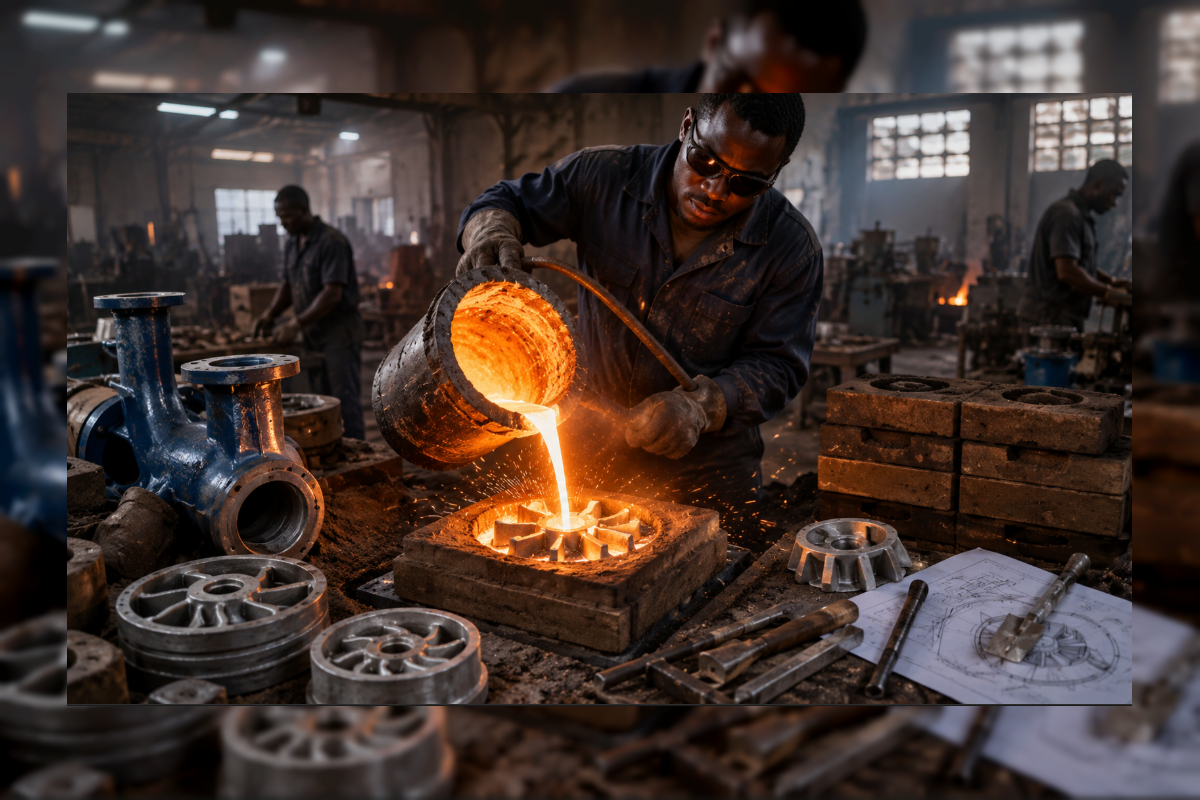

In the heart of bustling local industrial hubs, away from the sterile, high-tech factories of global corporations, a quiet form of mechanical magic takes place every day. Local artisans are playing a crucial role in maintaining essential water infrastructure. By mastering the intricate process of sand casting aluminum impellers for water pumps, these skilled technicians provide affordable, durable, and readily available solutions for farmers, homeowners, and small-scale manufacturers who rely on steady water flow.
Understanding the process behind these hand-cast components reveals not just a manufacturing method, but a deep intersection of traditional craftsmanship and practical engineering. Their work demonstrates how local knowledge and technical skill can solve real-world challenges while supporting economic development and self-reliance.
The Vital Role of the Impeller
To appreciate the artisan's work, one must first understand what an impeller does. Think of the impeller as the "heart" of a centrifugal water pump. It is the rotating component that converts the motor's mechanical energy into fluid energy. As it spins at high speeds, its uniquely curved blades accelerate water, pushing it from the center of the pump housing outward and creating the pressure needed to lift or move water through pipes.
The efficiency of a water pump depends heavily on the design and condition of its impeller. A properly balanced and accurately shaped impeller can significantly improve water flow and energy efficiency. Conversely, a damaged or worn impeller can reduce performance, increase power consumption, and eventually cause complete pump failure.
When an impeller wears out or breaks due to debris, corrosion, or cavitation, the entire pump system may stop functioning. While original equipment manufacturer (OEM) replacements can be expensive or unavailable, local artisans fill this gap with precision and ingenuity by producing reliable replacement parts at a fraction of the cost.
The Sand Casting Process: A Local Ingenuity
The method of choice for many artisans is sand casting. This age-old manufacturing technique is favored for its flexibility, relatively low tooling costs, and ability to create complex geometries without the need for expensive industrial equipment.
1. Pattern Making
The process begins with a "pattern"—a physical replica of the impeller. Artisans often use an old, intact impeller as a reference or create a new pattern from wood, plastic, or metal. This pattern must be carefully measured and crafted because every detail affects the dimensions and performance of the final casting.
Experienced artisans understand that even minor errors during pattern making can result in an impeller that performs poorly or fails prematurely. Precision at this stage is essential.
2. Creating the Sand Mold
The artisan prepares a mixture of high-quality silica sand, binding agents such as clay or resin, and a controlled amount of moisture. This mixture, commonly known as green sand, is packed tightly around the pattern inside a flask, which consists of two sections called the cope and the drag.
The sand must be compacted evenly to maintain the mold's structural integrity. If the sand is too loose, the mold may collapse during pouring. If it is too dense, gases generated during casting may become trapped, causing defects such as blowholes and porosity.
3. The Gating System
Once the pattern is removed, it leaves behind a cavity shaped like the impeller. The artisan then creates a gating system that controls how molten aluminum enters the mold.
- The Sprue: The main channel through which molten metal enters the mold.
- The Runners and Gates: Pathways that distribute molten aluminum evenly into the cavity.
- The Risers: Additional reservoirs that compensate for metal shrinkage during cooling and solidification.
A well-designed gating system is critical because it ensures smooth metal flow, reduces turbulence, and minimizes casting defects.
4. Melting and Pouring
Aluminum ingots or recycled aluminum scrap are melted in a furnace until they reach the appropriate pouring temperature. Before pouring, impurities known as dross are carefully removed from the surface of the molten metal.
This stage requires concentration, timing, and experience. The molten aluminum must be poured steadily and continuously to ensure complete filling of the intricate impeller blade sections. Any interruption can result in incomplete casting or structural weaknesses.
5. Cooling and Finishing
After the metal cools and solidifies, the sand mold is broken apart to reveal the newly formed impeller. The artisan removes excess sand, cuts away the sprue and risers, and begins the finishing process.
The casting is then ground, filed, and polished to achieve the required dimensions and surface quality. Most importantly, the impeller must be dynamically balanced. Even a slight imbalance can cause excessive vibration at high rotational speeds, leading to bearing wear, mechanical damage, and reduced pump lifespan.
Why Local Casting Matters
The work of local artisans extends far beyond simple repairs. Their contributions help sustain industries, support agriculture, and provide affordable solutions to communities that depend on reliable water systems.
- Affordability: Locally produced impellers eliminate many costs associated with imported components, making maintenance more accessible for small businesses and farmers.
- Availability: Local production significantly reduces waiting times. Instead of waiting weeks for imported parts, customers can often obtain replacements within days.
- Adaptability: Artisans can customize impellers to fit older pump models or unique operating conditions, providing flexibility that mass manufacturers often cannot offer.
- Economic Impact: Local casting supports jobs, strengthens technical skills within communities, and keeps money circulating within local economies.
Challenges Faced by Local Foundry Artisans
Despite their expertise, many local foundry artisans face significant challenges. Limited access to modern equipment, quality testing instruments, and advanced manufacturing technologies can make it difficult to achieve consistent production standards.
Energy costs also present a major obstacle. Operating furnaces requires substantial fuel or electricity, both of which can be expensive and unreliable in some regions. Additionally, fluctuations in aluminum prices can affect profitability and production planning.
Another challenge is access to technical training. While many artisans acquire remarkable skills through apprenticeships and hands-on experience, opportunities for formal engineering education and advanced foundry training may be limited. Expanding access to vocational education and technical workshops could greatly enhance productivity and product quality.
The Path Forward: Quality and Innovation
Traditional sand casting methods have proven effective for decades, but many artisans are now embracing modern improvements to remain competitive. The adoption of better molding materials, digital measuring tools, improved furnace controls, and advanced balancing techniques is helping increase product reliability and performance.
Some workshops are also integrating computer-aided design (CAD) software and 3D-printed patterns into their operations. These innovations enable more accurate designs, shorter production cycles, and greater consistency between castings.
Partnerships between local foundries, technical colleges, engineering institutions, and government agencies can further accelerate growth within the sector. Investment in training, equipment, and quality control systems will help artisans meet higher standards and access larger markets.
The next time you switch on a water pump, consider the engineering marvel hidden within. Whether manufactured in a large industrial facility or produced by the skilled hands of a local artisan, the impeller remains a remarkable example of practical engineering.
These artisans continue to demonstrate that with knowledge, creativity, and a simple mold filled with sand, they can keep the lifeblood of communities—clean and reliable water—flowing where it is needed most. Their work is a powerful reminder that innovation does not always come from massive factories; sometimes it emerges from small workshops where craftsmanship and engineering work hand in hand.
Comments (0)
No comments yet. Be the first!
Please login to leave a comment
Login to Comment