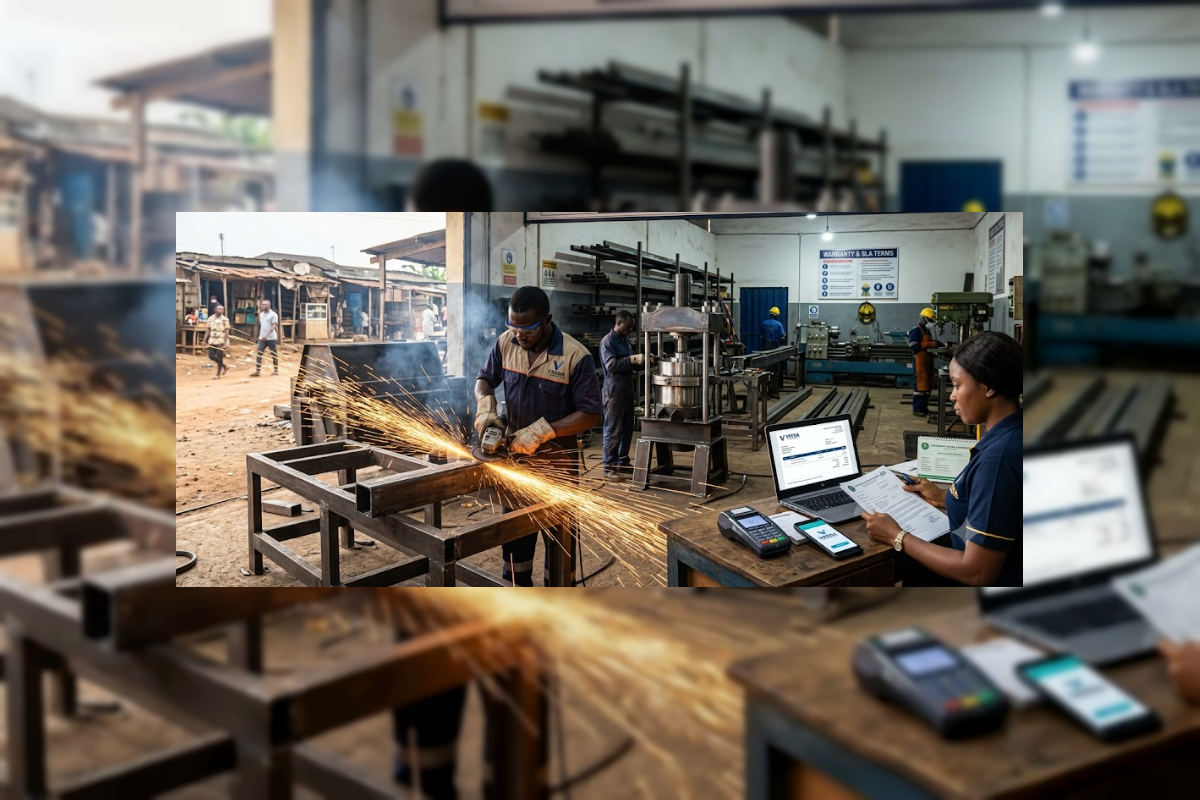

A practical B2B roadmap for local blacksmiths, machine fabricators, and indigenous engineering hubs to structure their business, attract corporate clients, and secure institutional contracts.
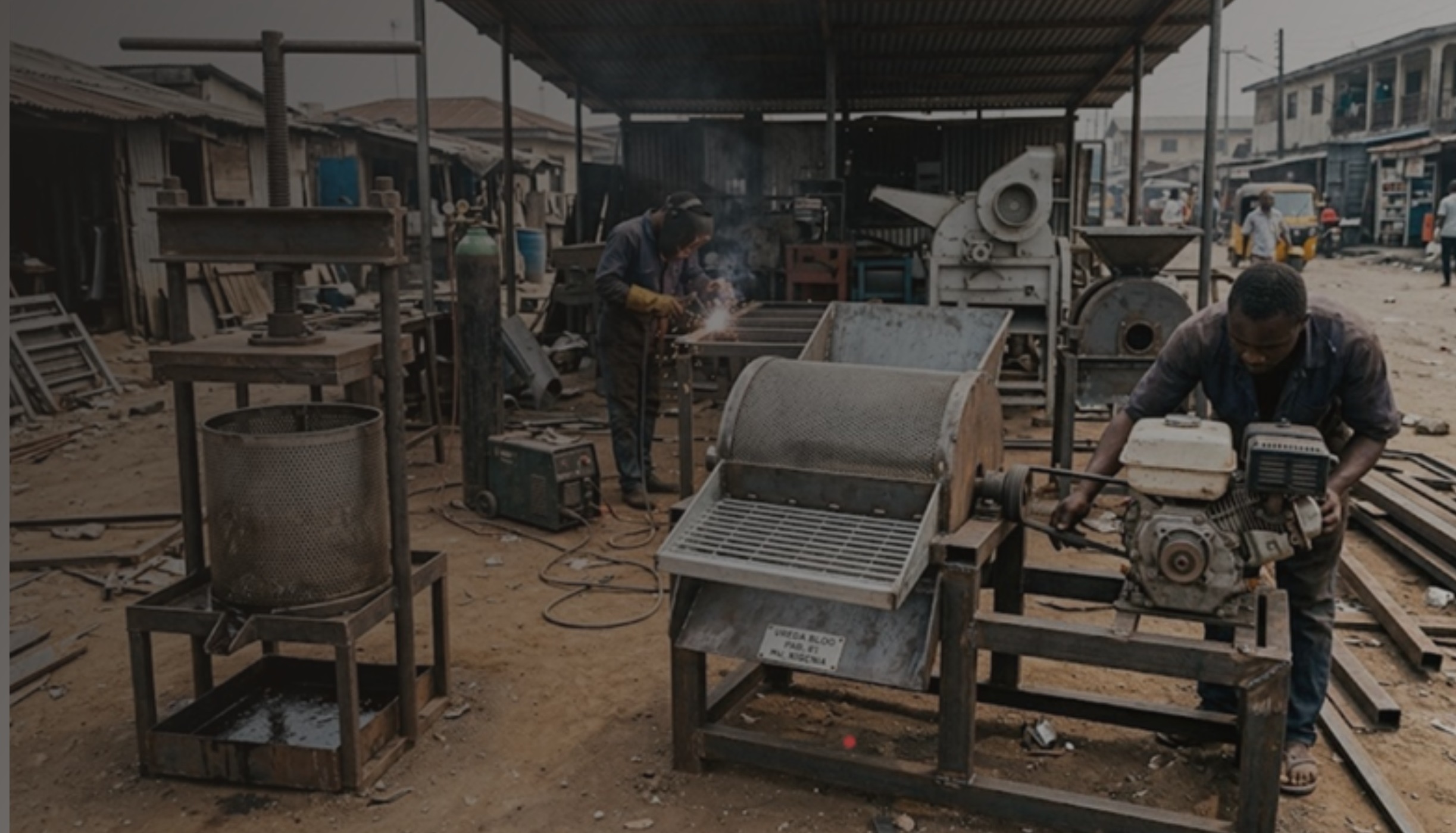
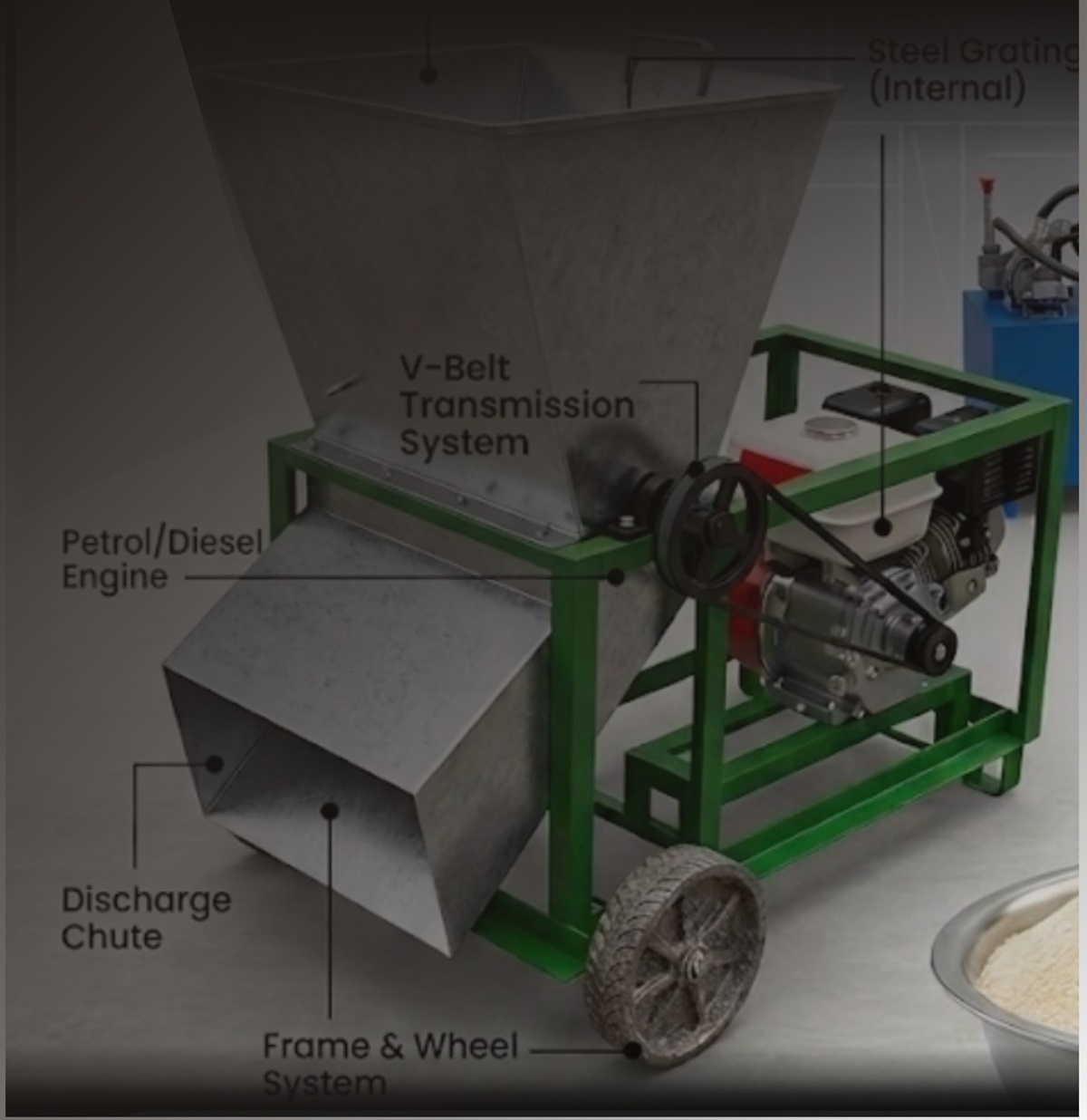
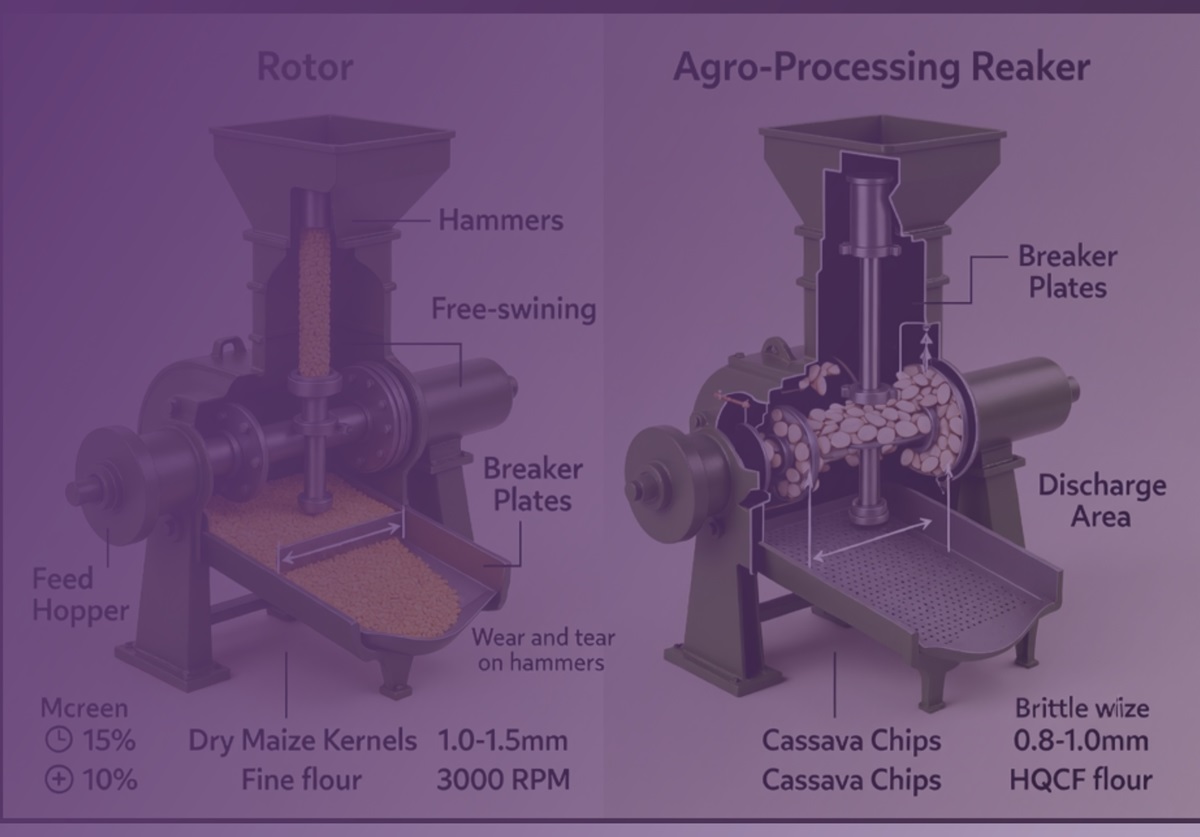
Across Nigeria's vast industrial landscape, there is an incredible wealth of technical genius operating right from the open air. In clustered engineering hubs from Aba to Lagos, local machine fabricators, skilled blacksmiths, and indigenous mechanics achieve remarkable feats of physical engineering daily. They construct heavy-duty cassava processing plants, multi-ton palm oil extraction presses, industrial hammer mills, and high-tolerance casting dies out of raw iron plates and scrap carbon steel. These artisans possess the exact practical intelligence required to drive the nation's domestic manufacturing sector.
Yet, despite this mastery of the forge and lathe, a massive economic barrier separates these brilliant makers from high-yield financial success. To the corporate world, the agro-processing conglomerate, and the government procurement board, an unregistered workshop is viewed merely as an informal "roadside mechanic." This informal status has nothing to do with the quality of the welds or the efficiency of the electric motors; it is entirely an administrative disconnect. High-value institutional buyers operate under strict regulatory and auditing guidelines. They are legally barred from sending millions of Naira to personal bank accounts or accepting hand-written receipts on plain paper. For an ambitious local fabricator, formalizing operations into a structured Small and Medium Enterprise (SME) is the ultimate key to breaking out of localized walk-in patronage and unlocking nationwide corporate orders.
Transitioning to a formal corporate structure does not mean losing your connection to the workshop floor or abandoning your core craftsmanship. Instead, it serves as an administrative armor that protects your brand, increases your market valuation, and qualifies your business to participate in lucrative, high-volume manufacturing tenders. When your operational compliance aligns with your practical engineering expertise, your workshop shifts from surviving on minor local repairs to scaling sustainable industrial production lines.
1. Demystifying Corporate Registration: The CAC Foundation
The primary step to shedding the "roadside" label is formalizing your legal existence through the Corporate Affairs Commission (CAC). Many workshop owners delay this process because they assume corporate registration is an expensive, overly complex bureaucratic maze. In reality, the CAC has digitized major parts of its workflow, allowing business structures to be established directly online.
For a growing fabrication outfit, registering as a **Limited Liability Company (LTD)** offers far greater long-term commercial advantages than a simple Business Name registration. A Limited Liability Company establishes your workshop as a distinct corporate entity. This means the business can own assets, secure industrial land leases, and take responsibility for liabilities independently of your personal finances. More importantly, corporate legal departments and institutional procurement boards almost universally require an LTD status before shortlisting an engineering contractor for large-scale factory installations.
Once your CAC registration certificate is issued, it comes with a unique Corporate Identification Number (RC Number). This number is your corporate passport. It must be prominently displayed on your workshop signage, business cards, website, and all official corporate correspondence to instantly signal to distant buyers that your engineering firm is legitimate, tracked, and fully compliant with Nigerian corporate law.
2. Financial Formalization: Corporate Banking and Tax Compliance
With CAC documents in hand, the next critical move is to completely separate your personal money from your workshop’s cash flow. Continuing to accept customer payments for industrial machinery through a personal bank account is a major red flag for high-intent corporate buyers. It screams informality and immediately kills trust during long-distance B2B transactions.
Take your corporate registration documents, your Tax Identification Number (TIN), and your workshop utility bills to a commercial bank to open a dedicated Corporate Current Account. When a client from another state receives a quotation or pro-forma invoice bearing a corporate bank name such as Vreda Engineering Solutions Limited—their security anxiety drops to zero. They know that funds wired into a corporate account are legally traceable, making them far more willing to make the large upfront deposits required to source heavy steel plates and motors.
Furthermore, a dedicated corporate account automatically creates a clean, structured financial track record. This bank statement is the exact asset you will need when applying for industrial expansion loans, asset-financing for advanced CNC plasma cutters, or bidding for large government agricultural intervention contracts. Alongside your banking, ensure you understand basic tax obligations by filing zero-returns or standard filings with the Federal Inland Revenue Service (FIRS) to obtain a formal Tax Clearance Certificate a mandatory document for any major corporate bidding pool.
3. Professional Invoicing Mechanics: The Language of Corporate Sourcing
In the informal market, transactions are closed with a handshake and a scribbled total on a piece of paper. In the formal SME market, transactions speak a specific language: the language of professional, itemized **Pro-Forma Invoices** and **Tax Invoices**. A professional invoice tells a corporate procurement officer that you respect business structure and understand manufacturing accounting.
Every invoice issued by your engineering workshop must be digitally generated and clearly outline these essential parameters:
- Granular Itemization: Never just write 1 Cassava Processing Machine ₦4,500,000. Break the build down technically. Itemize the structural steel frame gauge, the specific motor horsepower and brand (e.g., *Genuine 7.5HP copper-coil electric motor*), the auxiliary pulley systems, and the installation labor cost. This professional transparency completely justifies your price point and stops procurement officers from aggressively haggling down your margins.
- Structured Payment Milestones: Building heavy machinery requires high upfront material capital. Clearly state your corporate payment terms on the document (e.g., *70% upfront commitment deposit for material procurement, 20% upon physical workshop inspection/video verification, and 10% upon successful on-site installation and testing*).
- Validity Period: Metal prices in markets like Aba or Lagos fluctuate constantly due to global steel trade shifts and inflation. Always include an explicit invoice validity clause: *“This quotation is valid for exactly 14 business days from the date of issuance due to market volatility of raw steel components.”* This legally protects your profit margins from sudden material cost spikes.
4. Building Corporate Collateral: Service Level Agreements and Warranties
The absolute hallmark of a premium, formalized engineering SME is how it backs up its technical output. A roadside fabricator walks away from a machine the moment it leaves their yard. A formal engineering company provides structured peace of mind through a written **Warranty Policy** and a **Service Level Agreement (SLA)**.
Include a formal, beautifully typed page at the back of your technical quotes outlining a specific warranty framework—such as a *12-month structural integrity warranty on all weld lines and a 6-month operational warranty on moving mechanical bearings*. Specify what constitutes proper machine care and how your team handles maintenance call-outs. When an agro-processor or real estate developer realizes your workshop provides structured, post-purchase technical support backed by a legal contract, they will gladly pay a premium price for your machinery over an unregistered competitor.
The Bottom Line
Moving your machine fabrication workshop from an informal roadside operation to a fully registered, tax-compliant corporate SME is not about changing how you shape iron, it is about changing how you conduct business. By implementing a formal CAC framework, deploying structured corporate banking, and issuing professional, itemized digital invoices, you bridge the gap between indigenous craftsmanship and institutional capital, positioning your workshop to win elite, high-value corporate engineering contracts across Nigeria.

Comments (0)
No comments yet. Be the first!
Please login to leave a comment
Login to Comment